
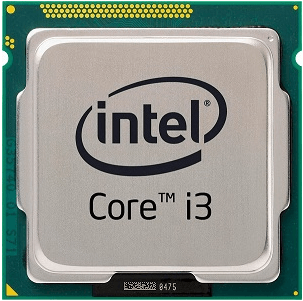
When in 2010 Intel presented the commercial name Core i3, i5 and i7 for the face of computers, some were paid. In fact, the company’s final goal was completely different – with this distinction between the processors, it was attempted to provide a simple and simple way to identify models with low, medium and high performance. Intel’s idea was to attract users’ attention with the following message: «Core i7 processors are better than Core i5, which in turn are better than Core i3». Unfortunately, this message cannot answer the question, because some are better than others and what is the difference.
After 2010 Intel and more confused the perception of users, launching a series of new generation processors based on different architectures: Sandy and Ivy Bridge, Haswell, Broadwell, Skylake. Although new technologies have been launched, the name of the Core i3, i5 and i7 production has not changed. The main reason why the name has remained the same is the fact that the main difference has not changed: the i3 face is designed for low budget systems, i5 for medium -level computers and i7 for the most powerful computers (games, photo editing/video).
In this article I will try to explain the main differences for this processor class.
Basic technologies
Let’s start with the demystification of a wrong concept: the name i3, i5 and i7 has no link with the number of cores. Intel has chosen these figures more or less arbitrarily, chips can contain two to four cores. Only some elite models can offer more. The main difference between the three names consists in the support of some technologies: individual or in combination with others.
Hyper-threading
At the beginning of the microprocessors technology, all the processors were equipped with a single nucleus, which performed a single function (thread/flow). The desire to improve the efficiency of calculation operations has increased the number of physical nuclei (up to two, four and then more). This allowed the processors to work in parallel with a large number of «flows» and carry out a greater number of tasks in a time unit.
The next step for Intel was the further optimization of the processor. Therefore, hyper-Threading technology appeared, which allows a single physical nucleus to process more than a flow at the same time. In other words, a processor with two cores (dual-core) with hyper-threading technology can be considered a four (albeit virtual) nucleus processor.
Turbo boost
In the past, the processors have worked on a frequency (speed, measured in cycles per second). In other words, their internal watch processes data with a certain constant speed, which is established by the manufacturer. The only way, which allows you to modify this speed, is called «overclooking»: a process through which a computer hardware component is forced to work higher than that specified by the manufacturer.
Today everything is different. Almost all modern processors (in particular the models, designed for mobile computers) work with a variable frequency (speed), which changes according to the load. Which leads to high energy efficiency and a longer battery life for mobile devices.
The amount of cache memory
All modern processors, regardless of the brand and the model, work with the data. Many of the operations performed are routine, that is, the same data are used over and over again. To accelerate the processor’s speed, these data are archived in a renouncement (a temporary storage area for the information you have copied or moved by a place and you want to use somewhere) of high speed. Therefore, at the request of the processor, these data are practically available immediately, because they must not read them again from the disk or the memory of the computer.
The amount of cache varies. The low budget models have 3-4 MB. In high class, cache memory can reach 6-12 MB.
As a rule, the greater the amount of cacke memory, the more efficient the processor will work. However, this «rule» does not apply to any application. For example, photographic and video editing programs will take advantage of the large amount of cache. Their operational principle provides for the reuse of some identical instructions (data set), therefore the large amount of cache will have a favorable effect on their performance.
However, by carrying out ordinary activities, such as surfing the internet or work with office applications, the amount of cache has a minimum impact.
Briefly on the types of Intel processors
Intel Core i3
Suitable for: Daily work. Perform activity quickly, such as office applications, internet browsing, HD quality streaming video.
Brief description: The most accessible class of Intel Core processors. It offers up to two physical nuclei and hyper-threading technology. It does not support turbo boost and energy consumption is relatively modest, therefore laptops, which are equipped with these processors, usually can boast of the long battery life.
Intel Core i5
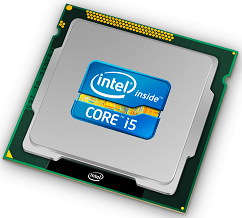
Suitable for: Intensive work with different applications simultaneously, for the processing of digital photos and clip video. Suitable for the most modern games.
Brief description: Processors, desktop computer and middle class laptops. It offers two to four physical nuclei, only not everyone supports hyper-Threading. They have the Turbo Boost function, which increases the processor frequency during heavy loads.
Intel Core i7
Suitable for: 3D modeling, heavy video processing (video editing in a high and ultra-high 4K) and the most advanced 3D games.
Brief description: The highest class of the chip, which offers Intel. There are two, four, six and eight cores, they support hyper-threading and turbo boost.
latest posts published

Lokky, the Italian data driven insurtech for professionals and SMEs
An ally for cyber security: Load Balancing
Business Trend 2023 for SMEs, professionals and commercial activities
Occupational risks for pastry shops
How to read a pay slip
What are the most common cyber risks and how to protect yourself
Clinical Risk: What it is and What are the consequences
Commercial activities most affected by theft
October is European Cyber Security Month